


CLICK TO CHAT
DownloadPrice ListDownload Our App:App StoreGoogle PlayFollow Us on:
INSTA PRESSFIT®/ INDUSTRY INSIGHT

The Shift from Plastic to Stainless Steel Piping: What’s Driving It?

For decades, plastic piping systems such as PVC, CPVC and PPR have been widely used across residential and commercial plumbing. They have offered practical installation, relatively low initial costs and broad availability.


However, as buildings become more demanding, expectations from plumbing systems are changing. Architects, MEP consultants, contractors and building owners are increasingly looking at factors beyond the initial purchase price—including durability, hygiene, corrosion resistance, installation efficiency and long-term performance.


This is contributing to growing interest in stainless steel piping systems for water supply and plumbing applications.


The shift from plastic to stainless steel is not about one material replacing another in every application. It is about selecting the right piping material for the performance requirements of a particular building.

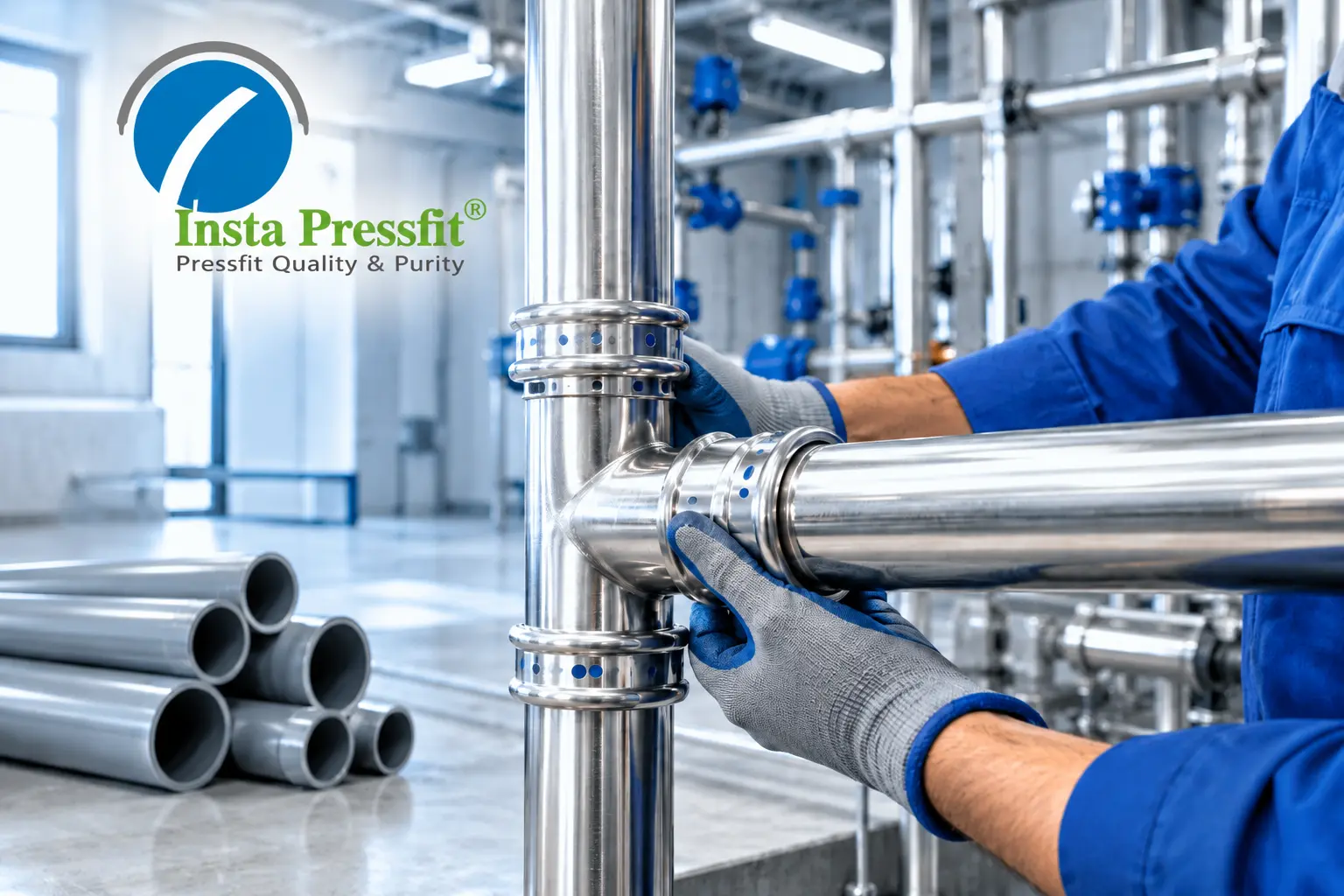
Pipes and fittings in plumbing systems
PLUMBING SYSTEMSENGINEERED FOR RELIABILITY

Why Is Stainless Steel Piping Gaining Attention?

Modern buildings are expected to perform reliably for decades. Water supply systems are difficult and expensive to replace once concealed behind walls, ceilings or service shafts.

As a result, the conversation is moving towards life-cycle performance. Stainless steel pipes combine mechanical strength, corrosion resistance, hygienic characteristics and long-term durability. When combined with modern press-fit technology, stainless steel piping can also offer an efficient alternative to conventional joining methods.

Long-Term Durability Matters More

One of the key reasons for considering stainless steel pipes is their inherent durability. Water supply piping is exposed to moisture, pressure, temperature variations and, depending on the environment, potentially corrosive conditions. Stainless steel is designed to resist corrosion and maintain its structural integrity when the appropriate grade and installation practices are used. This makes stainless steel water supply pipes particularly relevant for buildings where long service life is t67an important consideration.

Hygiene Is Becoming a Bigger Priority

The quality of a water supply system is not determined only by the water source. The materials and connections through which water travels also matter. Stainless steel has a smooth, non-porous surface and is widely used in environments where hygiene and material cleanliness are important. This makes stainless steel piping relevant for drinking water systems, hospitals, hotels, restaurants, commercial buildings and other environments where water hygiene is a key consideration.

Building Owners Are Looking Beyond Initial Cost

A lower purchase price does not necessarily mean a lower overall cost. When evaluating a plumbing system, building owners and project teams may need to consider installation time, maintenance, service life, replacement requirements and the consequences of failures. This is where life-cycle cost becomes important. A durable piping system can potentially reduce the frequency and cost of maintenance and replacement over the life of a building. For this reason, stainless steel pipe systems are increasingly being evaluated on total value rather than only initial material cost.

Press-Fit Technology Is Changing Installation

One of the biggest developments supporting stainless steel piping is the wider adoption of press-fit connection technology. Traditional stainless steel installation methods may involve welding or threading. Press-fit systems use specially designed fittings and pressing tools to create secure mechanical connections without on-site welding. Insta PressFit® Stainless Steel Pipes & Fittings are designed around this approach, helping make stainless steel piping more installation-friendly for modern plumbing projects. Features such as the Uncrimped Fitting Indicator and Leak-Before-Press concept can also help installers identify connections that have not been properly pressed.

Strength and Pressure Performance

Water supply systems can experience significant operating pressures, particularly in high-rise buildings, commercial developments and large-scale infrastructure. Stainless steel provides high mechanical strength and can be specified for demanding applications. The correct pipe grade, dimensions, wall thickness and joining system should always be selected according to the project's design requirements. This combination of strength and durability makes stainless steel an option worth considering for modern water distribution systems.

Corrosion Resistance Supports Long-Term Performance

Corrosion can affect the performance and service life of any piping system. Stainless steel contains chromium, which forms a passive protective layer on the material's surface. The level of corrosion resistance depends on the stainless steel grade and the specific environment in which it is installed. Grades such as 304 and 316L are commonly considered for different applications, with material selection based on water chemistry, environmental exposure and project requirements.

Modern Construction Needs Faster Installation

Construction schedules are becoming increasingly demanding. Reducing installation time without compromising connection reliability can have a significant impact on project efficiency. Press-fit stainless steel piping eliminates several steps associated with traditional joining methods. It does not require on-site welding, and installation can be carried out using specialised pressing tools. For contractors and MEP teams, this can make stainless steel press-fit systems a practical option where installation speed and consistency are important.

Stainless Steel Fits the Long-Term Infrastructure Mindset

A building's plumbing system may be hidden from view, but it is one of its most critical infrastructure components. The move towards stainless steel reflects a broader shift in construction: choosing materials based not only on upfront cost, but also on durability, reliability, hygiene, maintainability and long-term performance. For applications where these factors matter, stainless steel piping can provide a robust foundation for modern water supply systems.

Plastic vs Stainless Steel Piping: What Should You Consider?

There is no single piping material that is ideal for every project. The choice between plastic and stainless steel should be based on the application's technical and commercial requirements.
Project teams should consider:

✓Water quality and hygiene requirement.

✓Operating pressure and temperature.

✓Corrosion and environmental exposure.

✓Staff and patient washroom systems.

✓Installation method and available tools.

✓Maintenance requirements.

✓Total life-cycle cost.

✓Building type and application.

For projects where durability, hygiene and long-term performance are priorities, stainless steel deserve serious consideration.

Where Is Stainless Steel Piping Being Considered?

Stainless steel piping can be used across a wide range of applications, including:


✓Residential and high-rise buildings.

✓Hotels and hospitality projects.

✓Hospitals and healthcare facilities.

✓Commercial buildings.

✓Restaurants and food-related facilities.

✓Industrial installations.

✓Drinking water and potable water systems.

✓Modern plumbing and water distribution networks.

The suitability of a particular stainless steel grade and piping configuration should always be determined according to project conditions and applicable standards.

The Role of Insta PressFit®

Insta PressFit® Stainless Steel Pipes & Fittings brings together stainless steel piping and press-fit connection technology for modern water supply and plumbing applications.

The system is designed to offer a combination of hygienic performance, corrosion resistance, mechanical strength and efficient installation.

With features including the Uncrimped Fitting Indicator and Leak-Before-Press concept, Insta PressFit® focuses not only on the pipe itself, but also on the reliability of the connection—the part of a piping system that can have a critical impact on overall performance.

Conclusion

The shift towards stainless steel piping is being driven by changing expectations from modern buildings.

Durability, hygiene, corrosion resistance, installation efficiency and life-cycle value are becoming increasingly important considerations alongside initial material cost.

Plastic piping continues to have its place across many applications. But where projects demand a durable, hygienic and long-term water supply solution, stainless steel piping offers a strong option.

With press-fit technology making installation faster and more efficient, systems such as Insta PressFit® Stainless Steel Pipes & Fittings are helping bring stainless steel into a new generation of modern plumbing and water supply applications.


CONTACT NOW